All the Flavours of Kraków
Recently I wrote about the iconic Kraków obwarzanki, which we encounter every day in various parts of the city — and when visiting Kraków, it’s impossible not to notice them.
But Kraków’s cuisine has much more to offer.
A few weeks ago, during the celebrations of Guide Day at the City Hall, I listened to a lecture by the creator of the Kraków Culinary Trail. The speaker talked about traditional local dishes, some of which I had never even heard of. And today I’d like to tell you about some of the places, dishes, and products from this trail.
Stary Kleparz – 700 Years of Tradition
Just a few hundred meters from the Main Square lies the Kleparz Market, which used to be the market of the independent town of Kleparz, incorporated into Kraków two centuries ago. For hundreds of years, you can buy fresh, high quality food there: vegetables, fruit, meat, bread, farm eggs, cheese, cold cuts, spices, and even live crayfish.
If you value local flavours, there is hardly a better place to shop.
Kraków-Style Żurek – the Best of Polish Soups
If we compare Polish cuisine with, for example, German, English, or Irish cuisine, we won’t experience a cultural shock. Due to similar environmental conditions, the available ingredients were also similar: meat, vegetables, potatoes, and grains formed the basis. Low temperatures for most of the year required hearty, calorie rich dishes.
But there is something that, in my opinion, we do much better — Polish soups. And the king of all Polish soups is żurek.
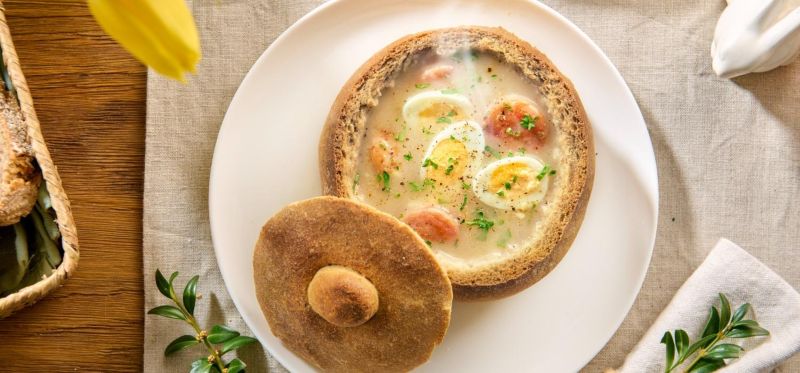
Żurek is made on a base of rye sourdough. Ferments and pickled foods have been an essential part of the Polish diet for centuries — something that aligns perfectly with today’s healthy eating trends. It is a filling soup served at celebrations, traditionally at midnight during weddings. The local Kraków version is less sour and contains plenty of vegetables, including potatoes. Traditionally, sausage and eggs are added, although there is also a vegan version with centuries of tradition, eaten during Lent when meat — and sometimes all animal products — were avoided.
Kraków-style żurek was added to the list of traditional products in 2018.
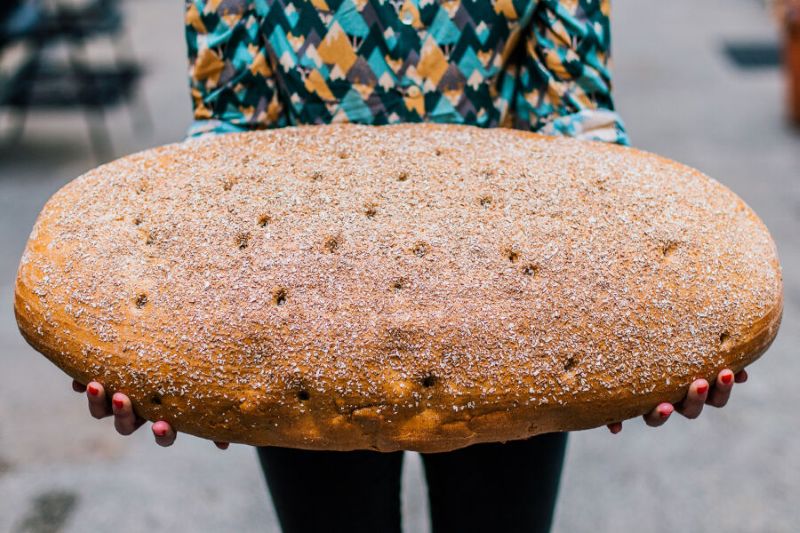
Prądnicki Bread – a Tradition Brought Back to Life
Bread is one of the oldest and most fundamental elements of cuisine across cultures. The local variety, Prądnicki bread, was baked in the former village of Prądnik — now a district of Kraków — where bakers supplied bread to, among others, the bishop’s court.
This bread was famous for its enormous size, sometimes weighing over a dozen kilograms. It wasn’t eaten right after baking; only the next day did it develop its characteristic aroma and flavour. It was a food that united all social classes — eaten by both the poor and the wealthy.
Interestingly, its production stopped in the 1930s, but the tradition did not disappear forever. It was revived in modern times. Today you can buy it not only at Stary Kleparz but also in shopping centres such as Bonarka, Bronowice, Kapelanka, Galeria Kazimierz, Galeria Krakowska, M1 Nowa Huta, Serenada, and Zakopianka.
Prądnicki bread is listed as a Protected Geographical Indication (PGI) product in the EU.
Caraway – a Typically Kraków Spice
Although I’ve lived in royal Kraków on and off since 2003, when I came here to study, I spent my childhood hundreds of kilometres away. When I arrived in Kraków, I noticed — besides rice added to almost every soup — the generous use of caraway in soups, baked goods, and other dishes.
Caraway is sprinkled on bread and savoury pastries, such as the kapuśniak sold at the Pawlak bakery on Sławkowska Street — a semi puff pastry filled with cooked sauerkraut. In other parts of Poland, we eat less caraway, although traditionally it is added to cabbage dishes, sauerkraut salads, or bigos, which contains plenty of cabbage, meat, and cold cuts — including a fair amount of fat. Caraway aids digestion, especially of heavy dishes. A similar role was once played by a shot of well chilled vodka between hearty courses.
More about the Kraków Culinary Trail can be found on the city’s website.
Interested in discovering the traditional flavours of Kraków and Poland with me? Let me know.