More Flavours of Kraków
A week ago I wrote about Kraków sour rye soup (żurek), Prądnicki bread, caraway and other traditional elements of Kraków’s cuisine. Today we continue the topic. I even forgot to mention Kraków sausage, which—interestingly—is often asked about by tourists from Germany, where it seems to be better known than here. So let’s get started!
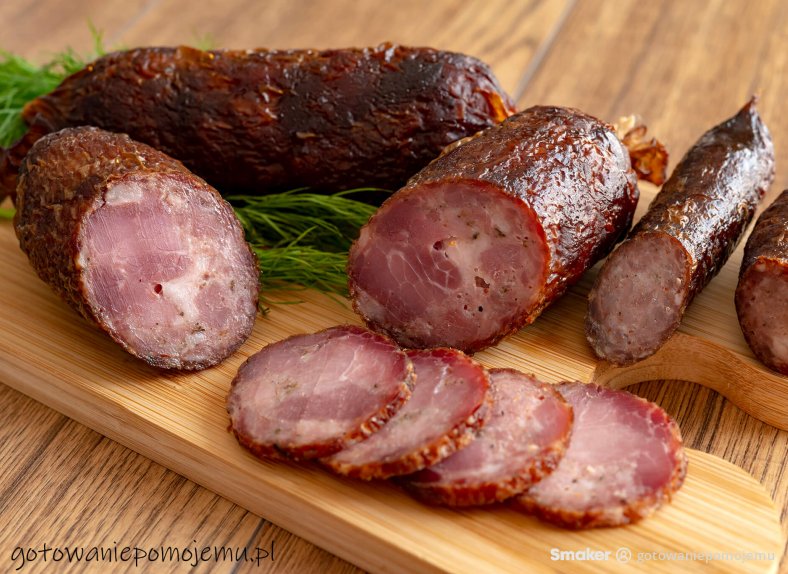
Kraków Sausage
Once iconic and still known even in Germany (in various regional forms), Kraków sausage is an essential part of Kraków’s culinary heritage. It is a lightly dried, thick sausage served as an appetizer, snack, or on buttered bread.
Traditional Kraków sausage is made of 85% pork, mainly ham, with a bit of potato starch. It is lean and not very fatty. The premium version from Liszki—a village famous for its meat‑curing traditions—is known locally as Kiełbasa Lisiecka. The importance of the “Kraków Sausage” brand is best illustrated by the legal dispute in the 2000s between the Sokołów company and the Małopolska Chamber of Regional Products.
Since 2018, Kraków Sausage has been registered in the European System of Protection for Regional and Traditional Products.
Głąbik Krakowski
Even vegans will find something in Kraków’s cuisine. Głąbik Krakowski is a local variety of stem lettuce traditionally grown in villages around Kraków. In the 19th century its flavour was described as slightly tangy, refreshing, and very easy to digest. It was eaten raw, and the thick stems were often fermented according to ancient preservation traditions.
Fermented vegetables are recommended by nutritionists for their probiotics, fibre, and vitamins B, C, E and K. Thanks to local food enthusiasts, you can still buy Kraków Głąbik fresh or fermented, e.g. at the Stary Kleparz market.
Maczanka po Krakowsku
Today you can buy a “deluxe” version: a piece of pork neck slow‑roasted for hours in a sauce with onions, marjoram and the ever‑present Kraków caraway. It’s served in food trucks in Kazimierz (I had a very good one on św. Wawrzyńca Street).
Originally, Maczanka was cheap fast food made from leftover roast meat, popular among students and coachmen. It is served in a bun with mustard and pickled cucumber.
Małdrzyki Krakowskie
For dessert—or even a sweet breakfast—I recommend Małdrzyki Krakowskie. On Kraków’s markets like Stary Kleparz or Plac Bieńczycki you can still buy homemade farmers’ cottage cheese.
To make Małdrzyki, mix 1 kg of cottage cheese with 100 g of butter and a bit of flour to form a dough. Shape small patties and fry them in clarified butter on both sides. Sprinkle with powdered sugar or serve savoury. They go perfectly with thick, homemade country cream.
Pudding from Kraków Groats of Queen Anna Jagiellonka
Kaszka Krakowska is a fine, unroasted buckwheat groats once extremely popular across Poland. Its delicate flavour and light texture made it ideal for puddings. It was eaten by all social classes and is even mentioned in royal household records from the time of Queen Anna Jagiellonka.
Although later replaced by processed foods, it has recently regained popularity due to its gluten‑free nature and nutritional value. It is increasingly available again in Kraków.
How was the pudding made? Cream was mixed with sugar, a glass of good arrack and lemon zest, then combined with the groats, baked for an hour in a buttered dish, and served with preserves. No wonder it was a dessert fit for royalty.
Taste Kraków
Kraków’s cuisine was not only delicious but also healthy: plenty of spices like caraway and marjoram, rye and wholemeal breads, groats, vegetables, fermented foods. It’s worth visiting this most beautiful of Polish cities not only to see Wawel, the Cloth Hall, St. Mary’s Basilica or Nowa Huta, but also to discover how Kraków tastes.
Would you like to taste it with me? Let me know.