
A Walk from Wawel to the Wolski Forest
Perhaps you’ve come to Kraków for a few days, explored the Old Town, Kazimierz, Nowa Huta and a handful of museums – and now you’re looking for an idea for the rest of your stay. Or maybe you’ve lived here for many years and want to rediscover the city. I’m always searching for such inspiration myself, so let’s head out together for a slow, relaxed walk. We’ll begin right by the Vistula River, at the statue of the Wawel Dragon. How much time do we need? A whole morning or afternoon. There’s no rush.
Along the Vistula Boulevards
If you don’t know the legend of the dragon, you’ll find it in another post. From the entrance to the Dragon’s Den we walk westward, staying on the same side of the river. We pass under the Dębnicki Bridge and see, on our right, the late‑modernist Jubilat department store from the 1960s – a true symbol of PRL‑era luxury.
Straight ahead, right on the riverbank, stands the monastery of the Norbertine Sisters, known locally as the Zwierzyniec Ladies. Although many people call this area “Salwator”, its historical name is the charming, rustic Półwsie Zwierzynieckie.
Salwator and the Salwator Cemetery
In Salwator proper, we can step into the nearly 800‑year‑old convent church of the Norbertine Sisters. A little further on, higher up the slope of Sikornik Hill, we see two remarkable churches: on the left the round wooden church of St Margaret, and on the right the Romanesque church of St Salvatore.
Behind them begins the elegant villa district of Salwator. If you feel like resting, there’s a decent bar on the ground floor of one of the villas along the main street. No ads, no names.
Continuing along Jerzy Waszyngton Avenue, we pass the beautifully located Salwator Cemetery, where Andrzej Wajda, Stanisław Lem, Feliks Koneczny and around 25,000 others are buried.
Kościuszko Mound and Fort Kościuszko
Above the cemetery stands one of the largest structures of the former Kraków Fortress: Fort Kościuszko, built of red brick. Today it houses the Kościuszko Museum, Radio RMF FM and a hotel. There’s also a café with a lovely view over the city.
An even better – though paid – panorama awaits at the top of the Kościuszko Mound, about which I’ve written before.
The Decjusz Villa
Around 20 to 30 minutes beyond the Kościuszko Mound lies the Decjusz Villa, a Renaissance suburban residence built by Ludwik Decjusz – an Alsatian by birth, a Pole by choice. Over the centuries it changed hands many times, belonging to families such as the Lubomirskis, Czartoryskis and Ledóchowskis.
The villa is surrounded by a beautiful park with a pavilion and numerous sculptures.
Piłsudski Mound, the Zoo and the Camaldolese Monastery
Heading back toward the Wolski Forest, another 20 minutes brings us to the Piłsudski Mound, built in the 1930s and the largest of Kraków’s mounds. Nearby are the charming Juliusz Lea Glade and the Kraków Zoo, which I wrote about recently.
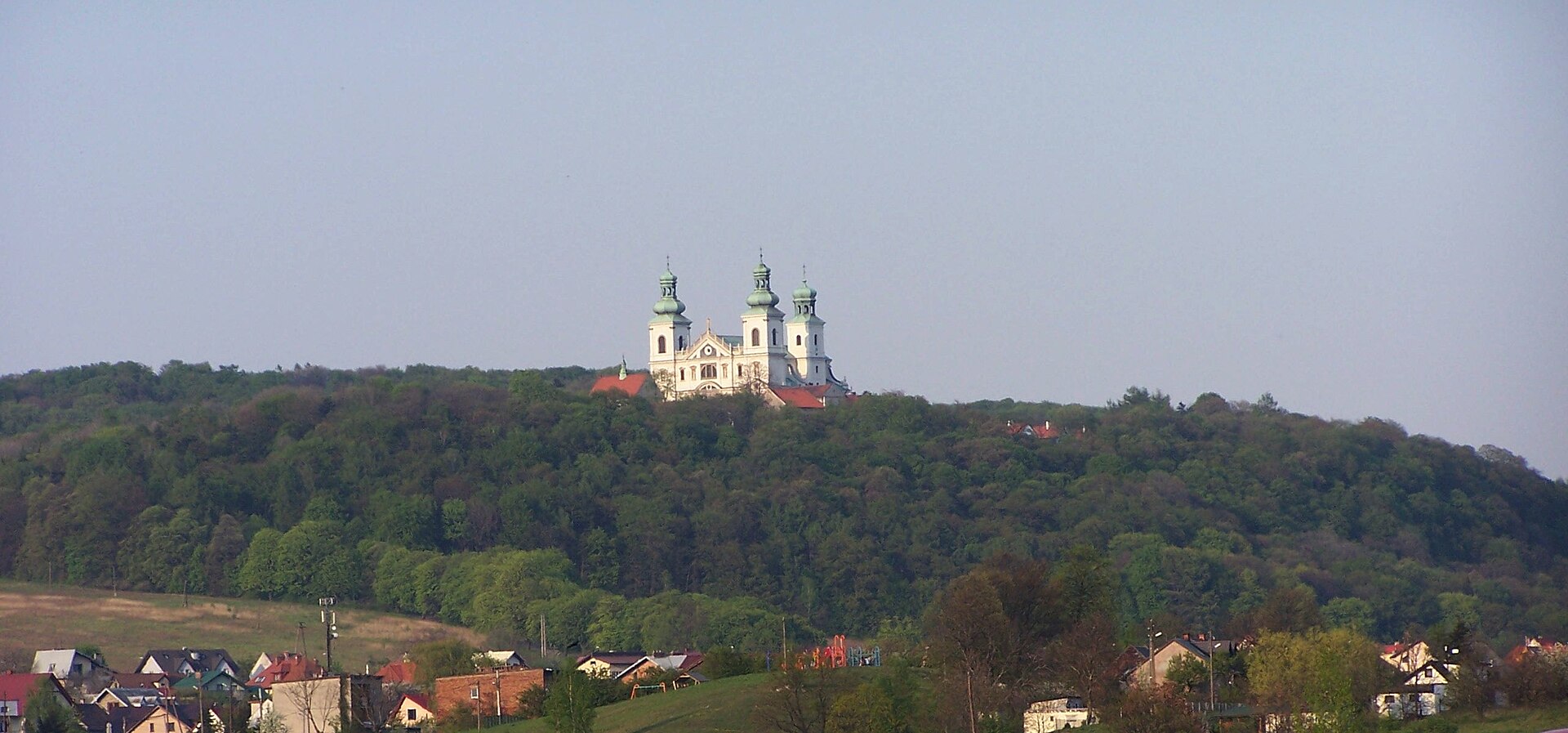
Those with more energy can take a detour southwards to the Camaldolese Monastery on Bielany. It is a strict, enclosed men’s monastery over 400 years old, where monks live in individual hermitages and meet only for prayer and occasional meals. Access is very limited, especially for women, who may enter the church only on twelve days a year.
Close by is also the vineyard of the Jagiellonian University.
Bielańsko‑Tyniecki Landscape Park
The entire area belongs to the Bielańsko‑Tyniecki Landscape Park, a hilly, picturesque terrain where you can escape the noise of the city and enjoy nature at its finest.
Would you like to explore this part of Kraków with me?
If you’d like to discover this royal side of the city – or any other – feel free to reach out. I’d be happy to guide you. Let me know: https://krakow-tour.pl/en/contact/
Fot. Jerzy Opioła – Praca własna za Wikipedia