Kraków Obwarzanek – a Tradition Since the Middle Ages
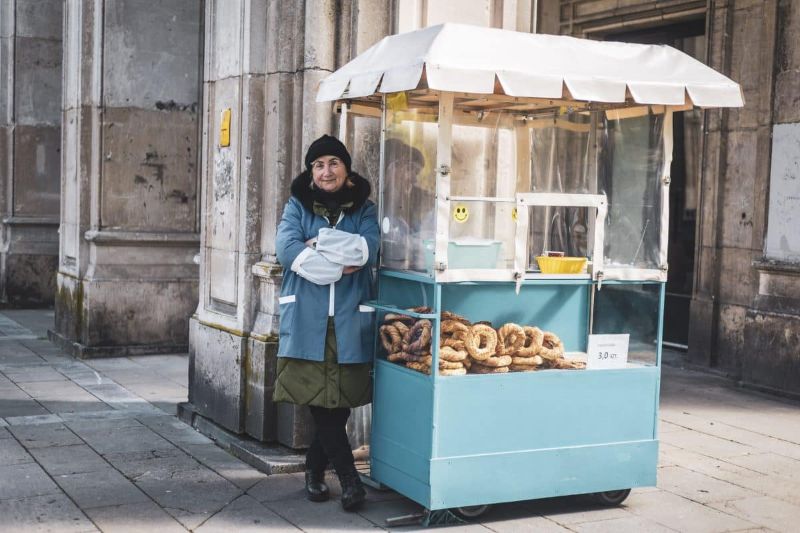
Anyone who has visited Kraków even once has surely come across the characteristic blue, glass-fronted carts selling round bread rings sprinkled with poppy seeds or sesame. Not everyone – even in Kraków – knows that obwarzanki are a local tradition dating back to the Middle Ages. The first mention comes from the late 14th century, and as recently as the 20th century they were sold straight from wicker baskets. Originally, obwarzanki were baked only during Lent, later all year round. One of the earliest records comes from the court of Queen Jadwiga of Anjou and reads: “dla królowej pani pro circulis obarzanky 1 grosz”.
Traditional Recipe of the Kraków Obwarzanek
As the name suggests, the obwarzanek must be “obwarzany” before baking – meaning briefly boiled. The obwarzanek is a protected product. Since 2010, by decision of the European Commission, it has been listed in the Register of Protected Geographical Indications. It is also included in the list of traditional products in the category of bakery and confectionery goods in the Małopolska region. It may be produced only within the city of Kraków and the Krakowski and Wielicki counties, and only from Polish ingredients.
Bakeries wishing to produce obwarzanki must undergo certification. Its appearance is strictly defined: a ring-shaped product, spirally twisted with visible braids, golden and shiny, well baked, sprinkled with poppy seeds, salt, sesame, or other toppings. The cross-section is round and white, typical of this type of dough.
An obwarzanek must be several centimeters in diameter and weigh around one hundred grams. Its shape comes from 2–3 strands of dough (“sulki”) braided by hand. The color ranges from light brown to golden to deep shiny brown. The texture is slightly firm, the surface smooth or rough. The taste must be distinctive – characteristic of freshly baked bread. A properly made traditional obwarzanek can be recognized by the burnt marks of the baking grate on the bottom.
The Kraków Obwarzanek – Part of the Local Landscape
Obwarzanki are sold almost exclusively from the carts that appear early in the morning – I don’t know exactly when, because I’m still asleep at that hour – in hundreds of fixed spots throughout the city. Sales continue until supplies run out, usually around noon or early afternoon. The price is about 3.5 zł, depending on the location and competition. They are usually sold by older ladies who earn a bit extra to supplement their pensions.
The Obwarzanek Museum
The Kraków Obwarzanek is such an inseparable part of the city that it has its own museum. It is located at Ignacego Paderewskiego 4, near Kleparz Market, where obwarzanki have been sold for centuries. The Living Obwarzanek Museum has existed since 2017. It not only tells the story of this unique local baked good but also organizes workshops where participants learn how to bake obwarzanki – and even receive the title of obwarzanek journeyman. The museum offers workshops for children, teenagers, adults, and seniors.
Kraków Obwarzanek – More Than Just a Dry Piece of Bread
An obwarzanek on its own, without butter or tasty additions, doesn’t appeal to me much – it’s too dry. After all, it’s just bread, although very tasty. More and more often, however, the obwarzanek becomes the base for fantastic sandwiches. I once had one in a Kraków bakery with salmon, cream cheese, lettuce, and radish.
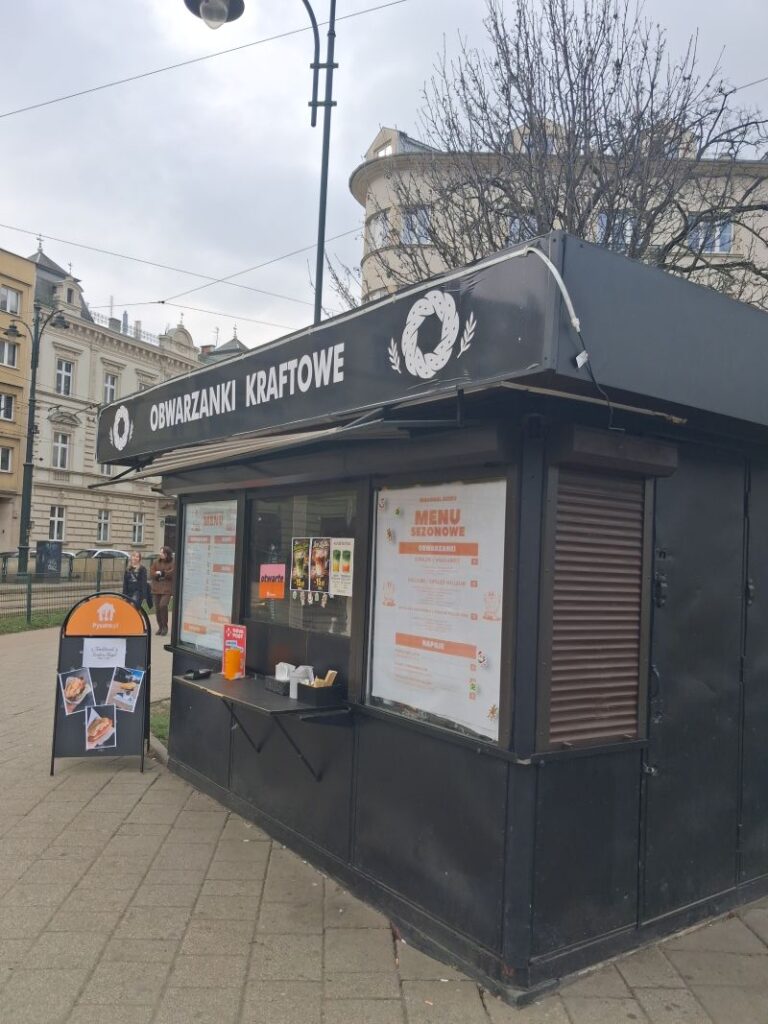
There are even special places where the obwarzanek is the main theme and prepared in various ways. One such place is located at the corner of Dietla and Starowiślna streets. What’s on their menu? The version with cream cheese and salmon I mentioned, an obwarzanek with “maczanka po krakowsku” – pulled pork in roast gravy (another typical Kraków specialty). They also offer regional highlander-style options such as obwarzanek with grilled oscypek cheese, bacon, and cranberry sauce. There’s a version with spicy salami, mozzarella, and honey, and even a sweet one with banana and Nutella.
Want to taste Kraków and explore it with me? Let me know – contact me.