Nowa Huta Design
Recently we reflected on the globally unique urban planning of Nowa Huta; today, let’s look at another remarkable aspect – Nowohuta design.
Nowa Huta – the devil is in the details
An old saying goes that the devil is in the details. The devil – or perhaps beauty. I’ll spare you the theological-linguistic digression that Lucifer means “the light-bringer” and get back to the topic.
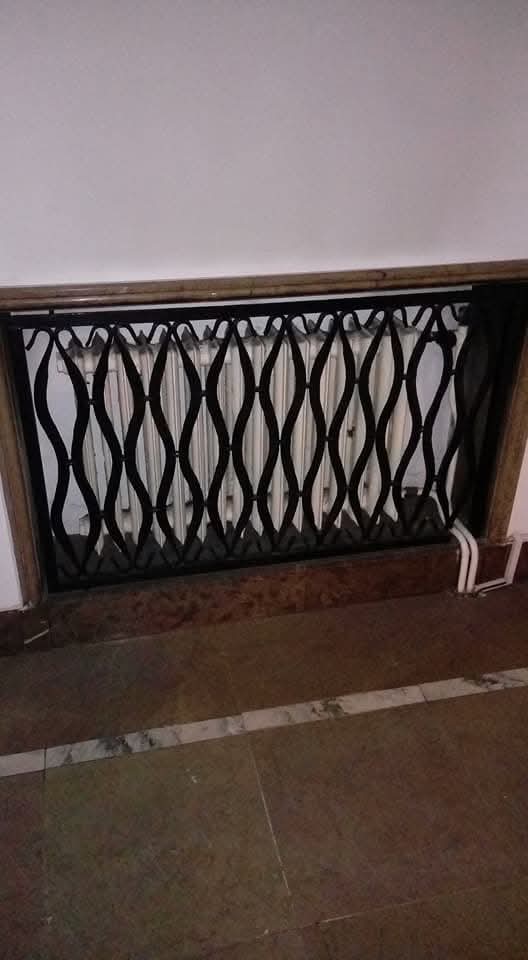
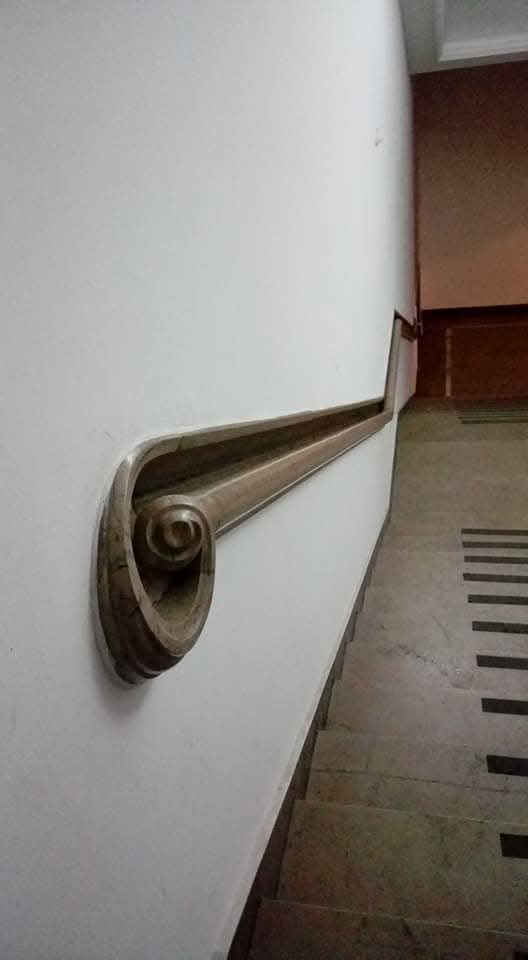
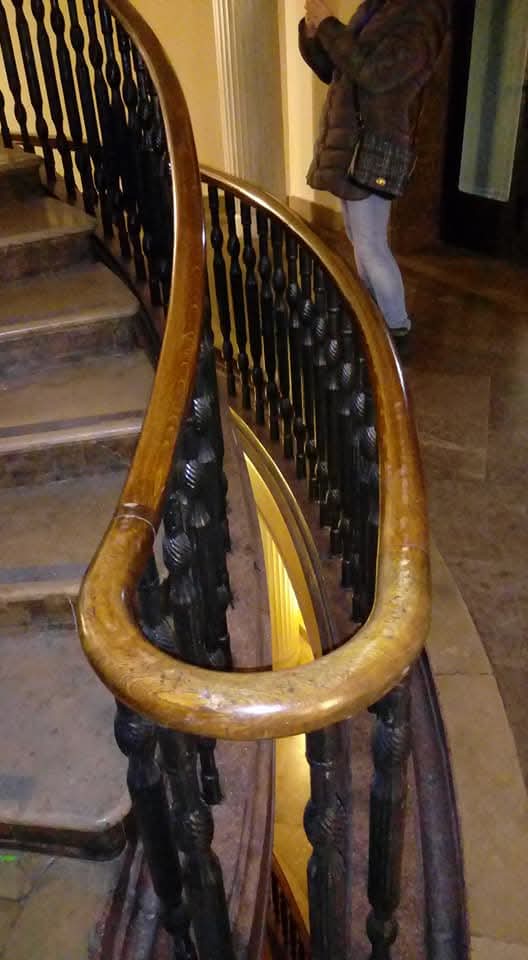
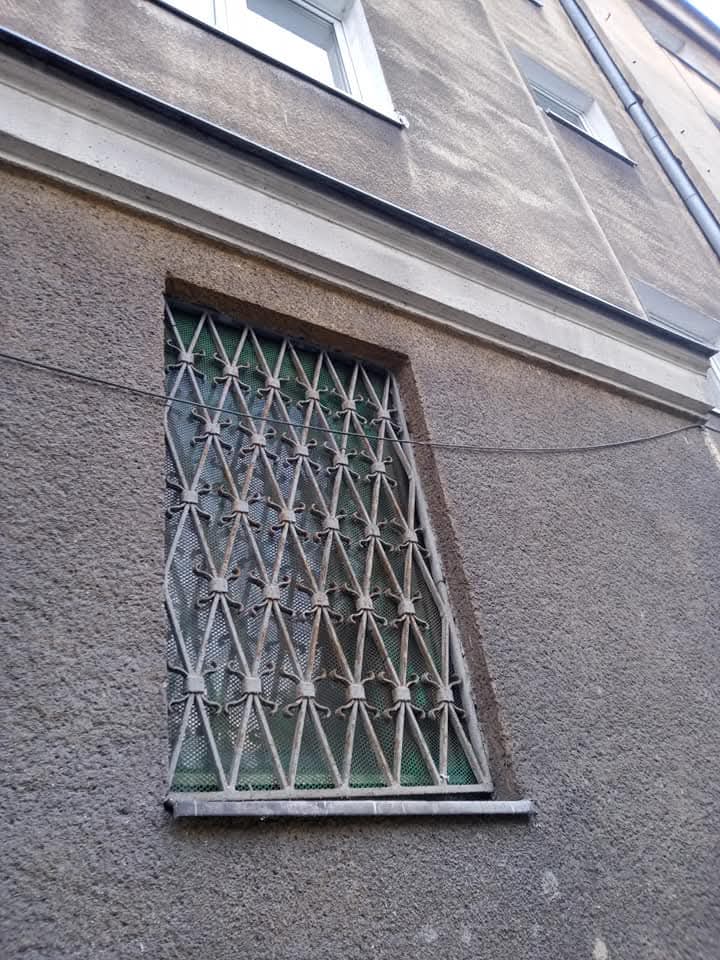
Nowa Huta is not only about urban planning and beautiful, well-designed, sensibly arranged buildings. It is also about the details inside and outside. Wrought-iron grilles, radiator covers, lamps, furniture, and other interior elements in Nowa Huta are often true works of art and wonderful examples of craftsmanship.
Nowa Huta – Marian Sigmund and others
The furnishing of the most representative buildings – such as Building Z (the management of the steelworks, one of the two twin buildings at the main gate), the shops at Plac Centralny, or the Ludowy Theatre – was entrusted to a special team: the Interior Design Studio led by Prof. Marian Sigmund.
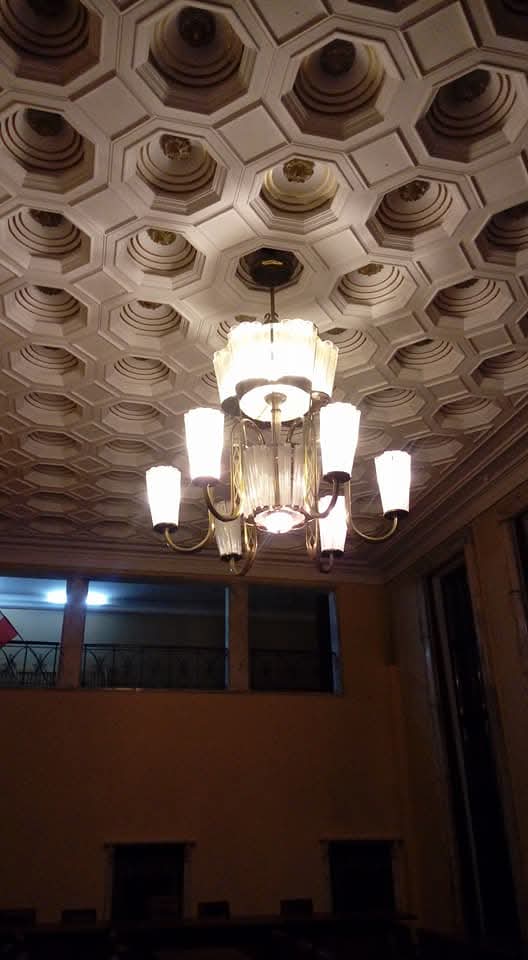
They designed furniture, chandeliers, grilles, mosaics, ceiling fixtures, and even the ceilings of public buildings.
Nowohuta design – what remains?
In the early 2000s, the beautiful two-level Skarbnica bookstore at Plac Centralny was closed and converted into a pharmacy. The conversion involved completely gutting the interior of its design-oriented, handcrafted (or as people now say: “craft”) furnishings and replacing solid wooden furniture with paper-like boards, and wrought metal with plastic and styrofoam. This act of barbarism (one of many) led to the interiors of the shops at Plac Centralny being placed under heritage protection.
Fortunately, part of the former Skarbnica became the restaurant Skarbnica Smaku, which recreated some of the bookstore’s original furnishings in a new arrangement. This gives hope that barbarism does not always have the final word.
Nowohuta Cepelia
The best-preserved interior is that of Cepelix (formerly Cepelia), a folk-art craft shop at Plac Centralny, in the Centrum B 1 estate. Most of the wooden furniture decorated with metalwork has survived, as have the wonderful ceramic chandeliers. But the most striking feature is the coffered ceiling with hand-painted ceramic plates. No two are alike. Each of the many plates is a unique work of art.
The shop owners – like the previously mentioned Skarbnica Smaku – reversed the damage caused by the brainless tenants of the neighboring telecommunications point, where beautiful wooden cabinets and a chandelier had been covered with drywall and the terrazzo floors hidden under carpeting.
Nowohuta design – where else?
Furniture, chandeliers, grilles, railings, doors, and other interior elements can be found in almost every building of the “old” Huta. I still discover new grilles today, after more than eight years of almost daily walks in the area. Chandeliers can be seen, for example, in the 24-hour pharmacy in Centrum A, in Cepelix, in Skarbnica Smaku, in the milk bar in Centrum C, or in the management building of the steelworks. Especially in the latter, much of the original design has survived. Unfortunately, the building is not open for daily visits. It stands empty, and tours take place only a few times a year.
Would you like to explore Nowa Huta and its design with me? Let me know: contact.