
What You (Perhaps) Don’t Know About St. Mary’s Basilica in Kraków
General information about the most magnificent of Kraków’s churches — the Church of the Assumption of the Blessed Virgin Mary, known as St. Mary’s Basilica — can be found on the parish website or even on Wikipedia. The best source, however, is the guidebook by Prof. Michał Rożek, who was both a tour guide and an art historian. Today I’ll try to share with you a few curiosities you may not have heard before.
St. Mary’s Basilica in Kraków – the Bugle Call
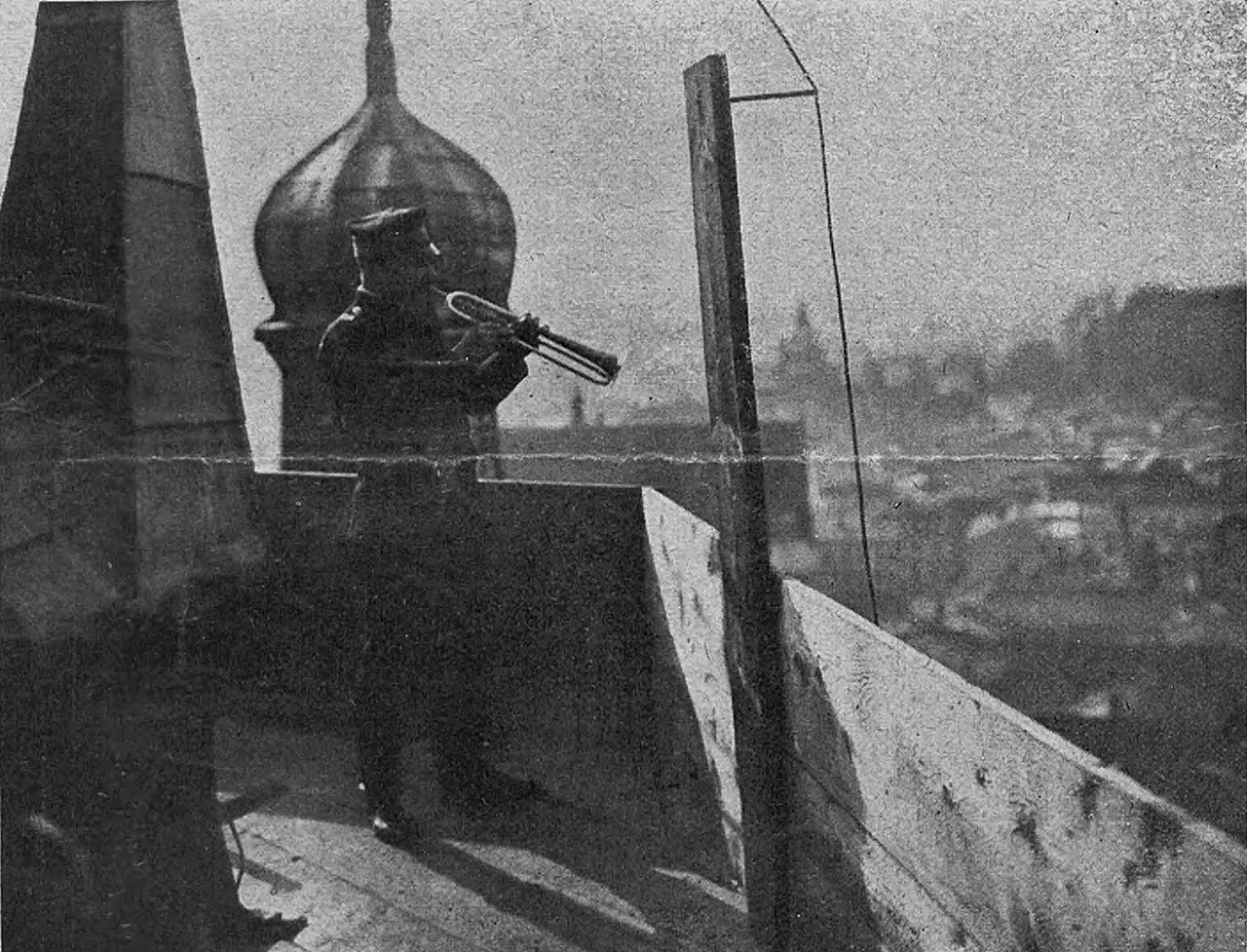
St. Mary’s Basilica is best known for its bugle call (hejnał), played from the higher, 81 meter tower, which served as a watchtower in the Middle Ages. This is precisely why the two towers of the church differ in height. The right tower, the bell tower, originally had an almost flat roof, allowing guards a full view of the city.
Everyone has heard the story of how, during the Tatar invasions of Poland in the 13th century, a guard spotted the Tatars sneaking up to the city, began to play the bugle call, and was shot. His companion supposedly grabbed the trumpet and continued playing, warning the townspeople of the danger.
Not everyone knows that this story is completely fabricated and only appeared in circulation in the 20th century.
The St. Mary’s Bugle Call – the Oldest Recurring Radio Program
Over the centuries, the watchtower ceased to serve its defensive function. The first written mention of the bugle call dates back to the 14th century. It was played in the morning and evening to signal the opening and closing of the city gates. From the 19th century it was played precisely at noon, and eventually every full hour, day and night.
Because it has been broadcast live every day at noon on Polish Radio Program I since 1927, it is the oldest recurring musical broadcast in the world.
St. Mary’s Basilica – Two Towers and the Knife in the Cloth Hall Crossway
We already know why the towers of St. Mary’s Basilica are not equal — the taller one served as a watchtower.
The tradition of guarding the city from above has survived to this day. Professional firefighters serve in the tower, climbing 239 steps (no elevator, of course) and playing the bugle call every hour in four directions: toward Wawel for the king, toward the Town Hall Tower for the councillors, toward the Florian Gate for visitors, and toward the Small Market Square for the merchants.
At the crossing of the Cloth Hall (near the Adam Mickiewicz Monument), about three meters above the ground, a knife hangs on a chain.
In the Middle Ages, it was used for “branding” thieves — cutting off the ears of those caught stealing for the second time. Hands were not cut off here, giving people a chance to work, but they were marked as rogues to warn others. I’m sure that afterward 99 percent never stole again — they were visible from afar.
The meaning of the knife was forgotten, and that’s when the legend arose about two brothers building the two towers of St. Mary’s. The older brother built the watchtower, but seeing that the younger one had the potential to build a more beautiful and taller tower, he killed him with the knife — which, as a warning, still hangs in the Cloth Hall today.
If you’d like to visit St. Mary’s Basilica with me, let me know and book a toor.