A Few Words About Nowa Huta
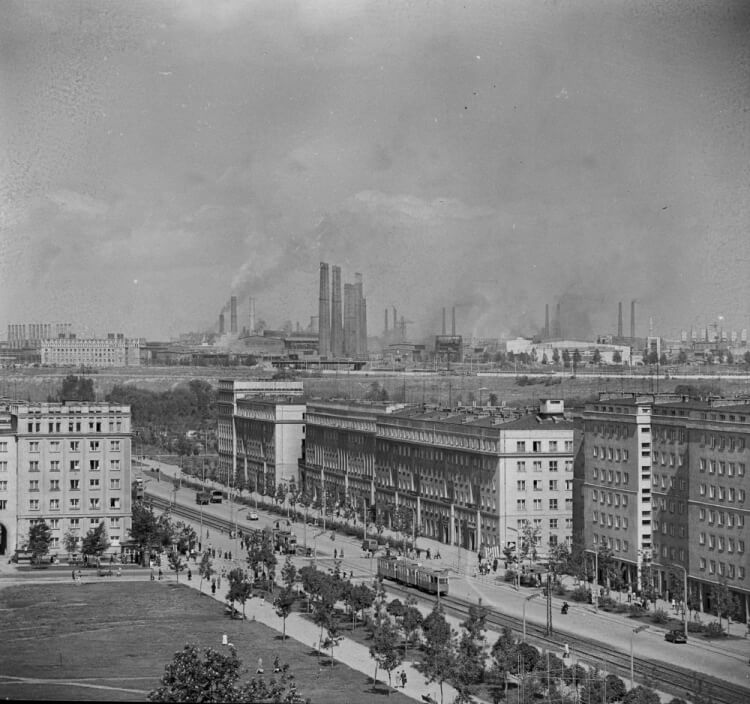
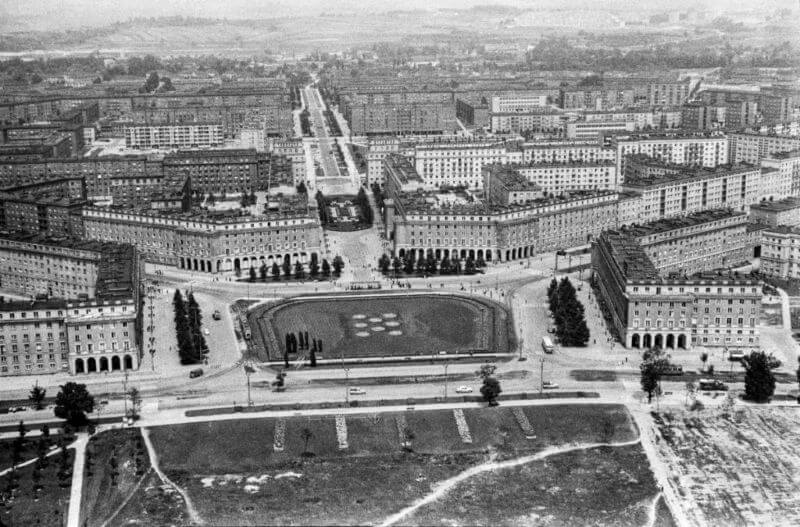
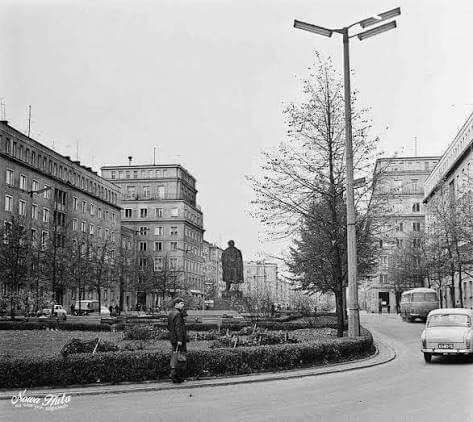
I will naturally dedicate my last entry of 2025 to my favourite district of Kraków – Nowa Huta. I have already written about this remarkable part of the city in a post published earlier this spring (LINK), but this time I decided to move from the general to the specific. What makes this district so unique, apart from the fact that I have lived here for over eight years and appreciate it more with every passing year?
Kraków’s Nowa Huta – full of legends
Although Nowa Huta was planned as an independent city, it never became one and was incorporated into Kraków already in the early 1950s. Like Kraków itself, it quickly became surrounded by a multitude of legends. The first of them concerns its very beginning. According to this legend, Nowa Huta was a socialist revenge on conservative Kraków. Indeed, during the first – and of course falsified – “3× yes/no” referendum (referenced in the cult film Sami Swoi, where Pawlak, to spite the pro-government Kargul, writes “3×No” on a wall), the number of “no” votes on the question of abolishing the Senate – a position supported by the still non communist opposition – was one of the highest in the country. And that is precisely why the communists decided to build an ideal socialist city from scratch – a counterweight to “reactionary” Kraków.
What was located where Nowa Huta stands today?
The area where Nowa Huta is situated, due to its proximity to the large city of Kraków and especially to the Vistula River – which, like the Nile, had fertilised the land through its floods for millennia – was used for agriculture. It was an area of vegetable and fruit cultivation intended to supply Kraków.
Of course, there were wealthy farmers with large estates and mill owners for whom the expropriation for the construction of the new city was an economic disaster. However, for most smallholders living in the typical one-room houses of Galicia, receiving a modern apartment in the newly built estates was undoubtedly a gain.
The area of present-day Nowa Huta includes the former villages of Czyżyny, Łęg, Bieńczyce, Krzesławice and Mogiła. About the last one I will write more soon, as it is home to an 800 year old Cistercian abbey and one of the oldest wooden churches in Poland.
Why a steelworks?
What is needed to start a steelworks? First and foremost, iron ore – and there is none in Poland. However, Kraków has a good railway connection with Ukraine, which does have such deposits. The second requirement is coal, which is abundant in neighbouring Upper Silesia. Steel production consumes enormous amounts of water, supplied by the Vistula River. And populous Kraków, with its many universities – including today’s AGH University of Science and Technology – provided the necessary workforce, including skilled engineers.